I was digging through a Solana transaction the other day and felt that familiar mix of curiosity and mild irritation. Something felt off about the fee pattern. Whoa! At first I shrugged it off, thinking this was normal network variance, but then the sequence of inner instructions and token transfers started telling a different story as I traced token sinks and memo fields across multiple accounts. My instinct said: this deserves a deeper look.
Okay, so check this out—if you use a blockchain explorer only to confirm a transfer succeeded, you're missing half the picture. Hmm… Solana is fast, cheap, and messy in ways that make forensic work both rewarding and frustrating. Initially I thought a simple tx hash scan would do the trick, but then I realized that inner instructions, program logs, and account state diffs often hold the real clue, especially for token swaps and wrapped SOL flows. Actually, wait—let me rephrase that: the top-level instructions are the headline, the inner instructions are the footnote that explains who really moved what, and the account changes are the receipts you should be reading.
Really? Yep. You can see memos, CPI calls, and program logs if you know where to look. Solscan makes most of these surfaces accessible in one place, which is why I've tapped it plenty. I'm biased, but having a single-pane view that combines transaction detail, token transfers, and analytics saves me a lot of time when I'm triaging on-chain events. This part bugs me about some other tools: they split the story across screens and force you to stitch context together manually.
Here’s the practical bit: when you open a transaction in an explorer, don't stop at status and fee. Look for these things—inner instructions that call Serum or Raydium, token transfer lists with non-obvious destinations, and changes in token account balances that don't align with the top-level transfer. Also check logs for “Program log:" lines; they often reveal program-specific events. If you see repeated tiny transfers to a new address, that pattern can hint at dusting or automated routing contracts.
Wow! There are analytics views that aggregate these patterns across time and across wallets. Longer term analytics help you see trends—like rising swap volumes for a token, or unusually high slippage events tied to a specific pool address—things that a single tx view won't reveal. On-chain graphs show liquidity movement, and cohort charts can expose bots or repeated attacker behavior. Somethin' about seeing the same pattern across dozens of txs just clicks in your head.
So how do you practically use an explorer for investigations? First, copy the transaction hash and paste it into the search. Then open the “Inner Instructions" and “Token Transfers" tabs. Next, inspect program logs for instructions emitted by contracts. Finally, track account deltas: who lost what, who gained what, and where the value ended up. If you like dashboards, use the analytics pages to roll up metrics over blocks or time ranges. These steps are very very important when you need a coherent narrative instead of fragmented clues.
Why Solscan Feels Like a Good Fit
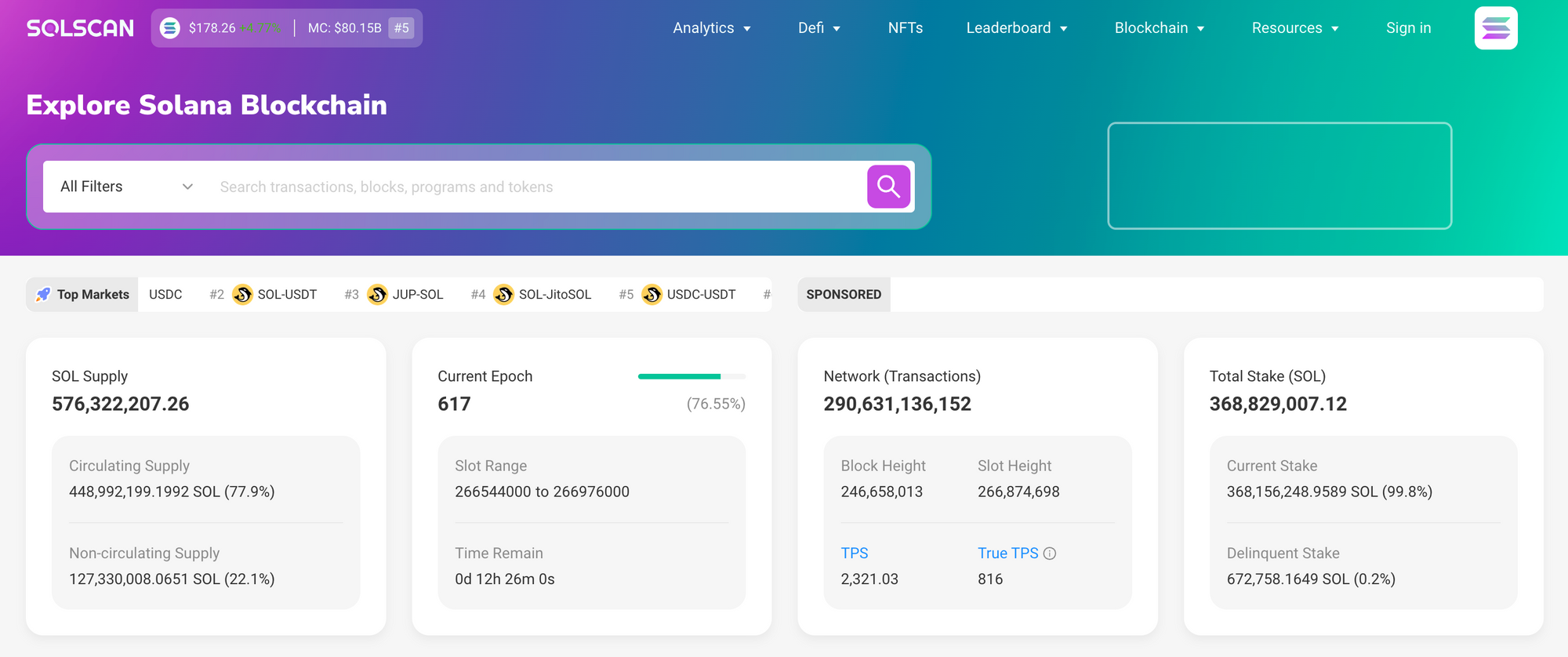
Solscan is straightforward and fast, and it surfaces most of the items I just described without forcing you to be an RPC jockey. If you want to try their interface, start here—it will take you directly to their explorer landing page so you can paste a tx and poke around. For quick checks I often use it as a first pass, and then move to raw RPC traces if I need more granularity.
On one hand, explorers are limited by the data they index and by UI choices. On the other hand, they're invaluable for day-to-day troubleshooting because they make common patterns obvious. I remember once spending an afternoon chasing a phantom balance discrepancy, and the explorer showed a hidden wrap/unwrap SOL dance that explained it. That was an “aha!" moment. Not every tool surfaces that as clearly, though.
Here's another tip: use the token mint and account views to see holder distributions and top accounts. That often tells a story about centralization risk or potential rug points. Also look at recent program interactions for an address; if an account is calling a decentralized exchange repeatedly with tiny amounts, you're probably seeing a bot or automated market maker strategy. If you see repeated CreateAccount calls followed by immediate transfers, that pattern often signals transient accounts used in laundering or batching flows.
Seriously? Yes. Logs and inner instruction traces can reveal CPI (cross-program invocation) chains, and those chains are where arbitrage, aggregation, and sometimes exploitation live. For example, a malicious actor might craft a transaction that calls multiple DEX programs in one go; analytically you need to reconstruct the path of tokens through each CPI to determine net flow. That reconstruction is often why I prefer an explorer that shows CPI lineage clearly.
I'm not 100% sure everything you need is always available in a GUI, though. For deep investigations I often fall back to decoding transactions with a local script that queries getConfirmedBlock or getTransaction via RPC with “jsonParsed" and “transactionDetails" options. On the flip side, if you're just monitoring for alerts, a dashboard with webhooks will do most of the heavy lifting without coding. Your tradeoff is speed versus depth.
Let me be honest: on some days the ecosystem feels like a blend of solid engineering and cowboy improvisation. That tension keeps things interesting. (oh, and by the way…) Keep a checklist when you probe transactions: tx hash, timestamp, fee payer, inner instructions, token transfers, affected token accounts, program logs, and related addresses. Repeat that checklist until it becomes muscle memory. It helps avoid missing the small cues that reveal larger patterns.
Quick FAQs
How do I trace a token transfer across multiple transactions?
Start at the first tx and note the token account that received the funds. Search that token account address in the explorer to list incoming and outgoing transfers. Follow outgoing txs iteratively, checking inner instructions for CPIs that move tokens between program-derived addresses. If transfers hop through wrapped SOL accounts or liquidity pool accounts, inspect those program logs for swap or pool-specific events.
Can explorers show me if a transaction was part of an exploit?
Explorers can surface suspicious patterns—repeated drains, rapid account creations, and large-value outflows to unknown addresses—but correlation isn't proof. Use analytics to find similar signatures across blocks, then dig into the CPI chain and token sinks for stronger evidence. Combining explorer findings with on-chain forensic tools and community reports gives you the best picture.
What's one pro tip for faster triage?
Make templates for common investigations: a minimal set of fields to inspect each time. Automate the repetitive queries with scripts or webhooks so you can focus on the anomalies. It'll save hours, trust me.
