Whoa! Seriously, the first time I opened Rabby I felt something click. It was small at first—just the way transactions read more clearly than in other wallets I used. My instinct said this might finally be the sane wallet for power users who also want simplicity. Initially I thought it was just another wallet, but then I dug deeper and realized Rabby solves some everyday friction points that trip up even experienced DeFi users.
Here's the thing. The UI isn't flashy, but it's honest and purposeful. I like that—I'm biased, but I prefer tools that get out of the way. On one hand, flashy onboarding videos look nice though actually they rarely help when you're knee-deep in a gas fee situation. On the other hand, Rabby gives readable gas recommendations, meta info, and a sensible approval flow which matters more to me than a shiny dashboard.
Hmm… there were niggles at first. I had to re-learn a couple of habits. But the learning curve was short, and that felt good. After a week of use I noticed fewer accidental approvals and fewer phantom tokens lingering in approvals (oh, and by the way… that one change saved me time). My workflow became faster and safer without me micromanaging every single step.
Okay, so check this out—Rabby makes multi-chain management less painful. The extension handles multiple networks smoothly, and switching feels nearly instant. I tested it across Ethereum, BSC, Arbitrum and Optimism, and it performed consistently. Initially I worried about cross-chain clutter, but the account grouping and labeling features kept things tidy, which is very very important when you manage several accounts.
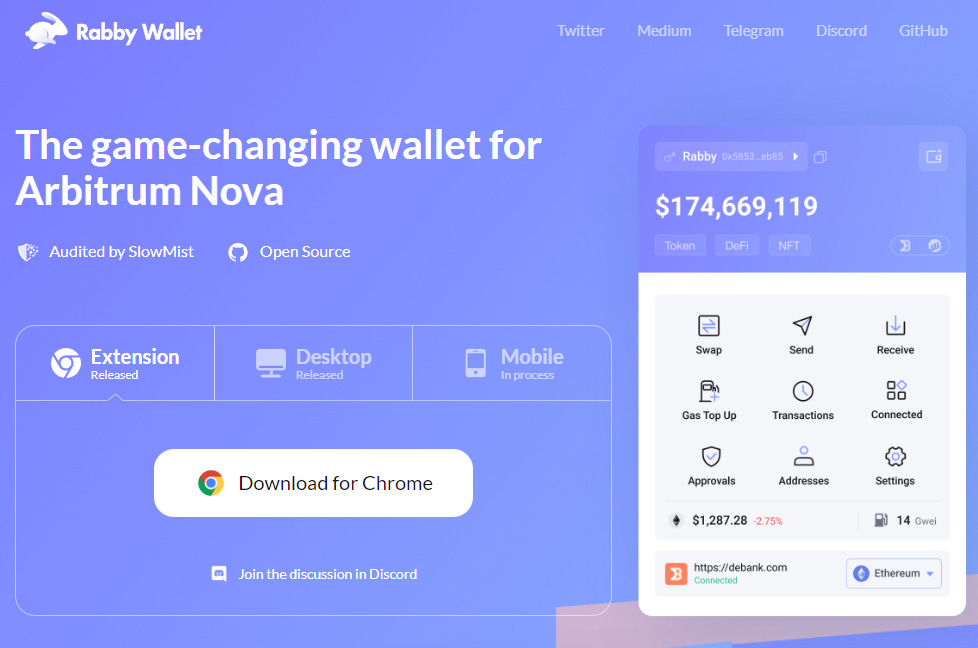
How Rabby Changed My Day-to-Day DeFi Routine
Really? Yes, and here's why. The approvals interface gives a clearer read on token allowances than what I was used to. My gut feeling said this would reduce risk, and empirically it did—fewer odd approvals, less accidental infinite allowance nonsense I used to stumble into. Actually, wait—let me rephrase that: it didn't stop all risky behavior (because humans are stubborn), but it made spotting the risky bits easier and faster.
One practical bit that bugs me about many wallets is confirmation spam. Rabby groups pending transactions logically instead of presenting a firehose of popups. That matters when you use wallets for bots, swaps, and quick trades during volatile markets. On some days this made me breathe easier, and on others it prevented small mistakes that could've cost me stout sums.
Something felt off about wallet swap UIs in general for a long time. Rabby's integrated swap options don't try to be an all-in-one aggregator, though they connect sensibly with common DEX paths. My experience was snappy and less confusing, even when gas shot up. On top of that, hardware wallet integration worked smoothly for me which was a relief—I've got a habit of moving funds and wanting that extra cold-security layer.
Hmm… security prompts popped up at good moments. The extension warns for suspicious approvals and highlights approved spenders. I appreciate that because approvals are the sneaky way funds vanish if you're not paying attention. On one occasion Rabby flagged a dApp that was asking for an unexpectedly broad approval, and I cancelled it—took me two seconds and likely saved me a headache.
Here's a small tangent. I'm not a security maximalist all the time—I trade and play with new contracts—but I do want sensible defaults. Rabby strikes that balance. Sometimes I want friction; sometimes I want speed. Rabby lets me pick. That flexibility is a legit productivity win for power users and newcomers alike.
Install Tip and Where to Get It
Okay, if you want to try it, snag the rabby wallet download and give it a spin. The setup was straightforward for me, though I did rename and tag accounts immediately so I wouldn't confuse them later. Honestly, taking two minutes to label accounts saved me from a couple of “which wallet did I use" moments. I'm not 100% sure every user's needs will match mine, but the extension's defaults are sensible enough to make the first run painless.
Onboarding felt conversational and not pushy. There are modest tooltips, and the transaction flow shows extra context you actually use. If you like command-of-the-console feel rather than polished marketing, you'll probably like Rabby. If you want every single feature spoon-fed, you might feel a little raw around the edges at first.
My instinct said to test it hard. So I did. I signed messages, connected to several dApps, tried swaps, and used hardware signing. Performance held up. Sometimes the UI lagged for a second during peak network congestion, but that was network-related not the extension itself. Still, for normal use Rabby was snappy and reliable.
Oh, and one more small pet peeve (this part bugs me): many wallets hide the spender address in tiny text. Rabby surfaces the spender clearly. That may sound trivial, but in practice it's a game-changer when you're vetting approvals quickly on mobile and desktop.
Who Should Use Rabby—and Who Shouldn't
My quick take: Rabby is great for active DeFi users who value both security and speed. If you routinely interact with many dApps, chains, and tokens, Rabby helps you stay sane. If you only hold long-term and touch your wallet monthly, you may not need the extra features, though nothing prevents you from using it. On the flip side, very beginner users who want a maximal hand-holding experience might prefer different onboarding—Rabby assumes a tiny bit of responsibility from the user, which I actually like.
On one hand, Rabby rewards people who pay attention; on the other hand, it reduces accidental mistakes by design. It's a nice middle path. And hey, I'm biased because I've spent years juggling multiple wallets and wish I'd had something like Rabby sooner.
FAQ
Is Rabby secure enough for storing significant funds?
Short answer: yes, with caveats. Use hardware wallets for large holdings and treat browser extensions as the convenient layer for active use. Rabby supports hardware signing and adds sensible approval warnings, but no extension replaces cold storage for long-term holdings.
Can Rabby handle multiple chains and accounts smoothly?
Yes. Rabby manages multiple networks and account labeling cleanly, making cross-chain activity less chaotic. It won't fix bad trading decisions, but it will lower the chance that you'll approve something you didn't mean to—somethin' I appreciate a lot.
